
Everyday choices can teach spending and saving without making children responsible for adult financial worries.
Make one choice concrete
At the store, compare two suitable items and explain the price difference. A small choice is easier for a young child to understand than the whole household budget. Keep the conversation calm and age-appropriate.
Use a small savings goal
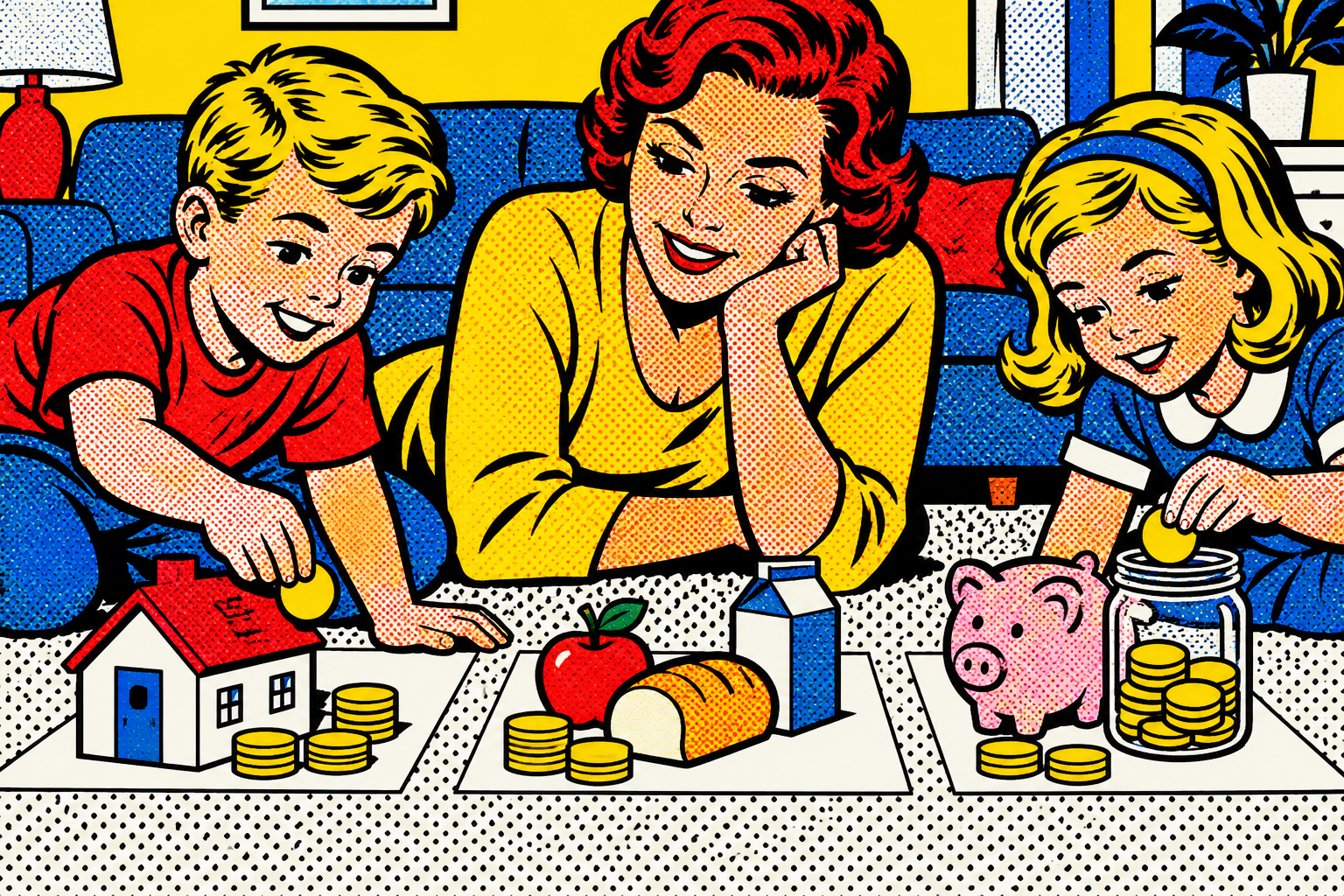
Help a child choose a realistic goal and record what is saved and what remains. A clear jar or simple chart makes progress visible without an app or account connection.
Explain tradeoffs without blame
Choosing a library outing over a paid activity can leave money for another goal. Describe it as planning. Avoid frightening details or expecting children to solve a household shortfall.
Add responsibility gradually
Older children can compare a purchase or plan a limited activity budget. If you use allowance, agree what it covers. Treat mistakes as opportunities to revise the plan; essential needs and adult bills remain adult responsibilities.
Further reading: Consumer guidance. Explore our Money 101 guides.