This article uses the 2014 film You’re Not You as an emotional entry point into a financial topic that affects millions of American families — and almost no one talks about it openly.
Kate is a concert pianist. She’s 32, talented, and in the opening scene of You’re Not You, she plays Rachmaninoff in front of a packed house while her body begins betraying her in ways she can’t yet name. Within months, she’s using a wheelchair. Within a year, she can’t lift a fork.
What happens to her bank account is not a subplot. It’s the second act.
Her husband Quinoa has health insurance — good health insurance, the kind you get when someone has a stable teaching job. But good health insurance, it turns out, is a phrase designed by someone who’s never had to call an insurance company from a hospital parking lot.
“Standard health insurance is like a raincoat that covers your torso. It leaves your legs completely wet. And when the storm comes, you’re still soaked.”
That’s not a quote from the movie. That’s what happens when you add up what the movie’s insurance actually covered — and what it didn’t. Watch the trailer on Amazon Prime and see for yourself.
What the Insurance Gap Actually Means
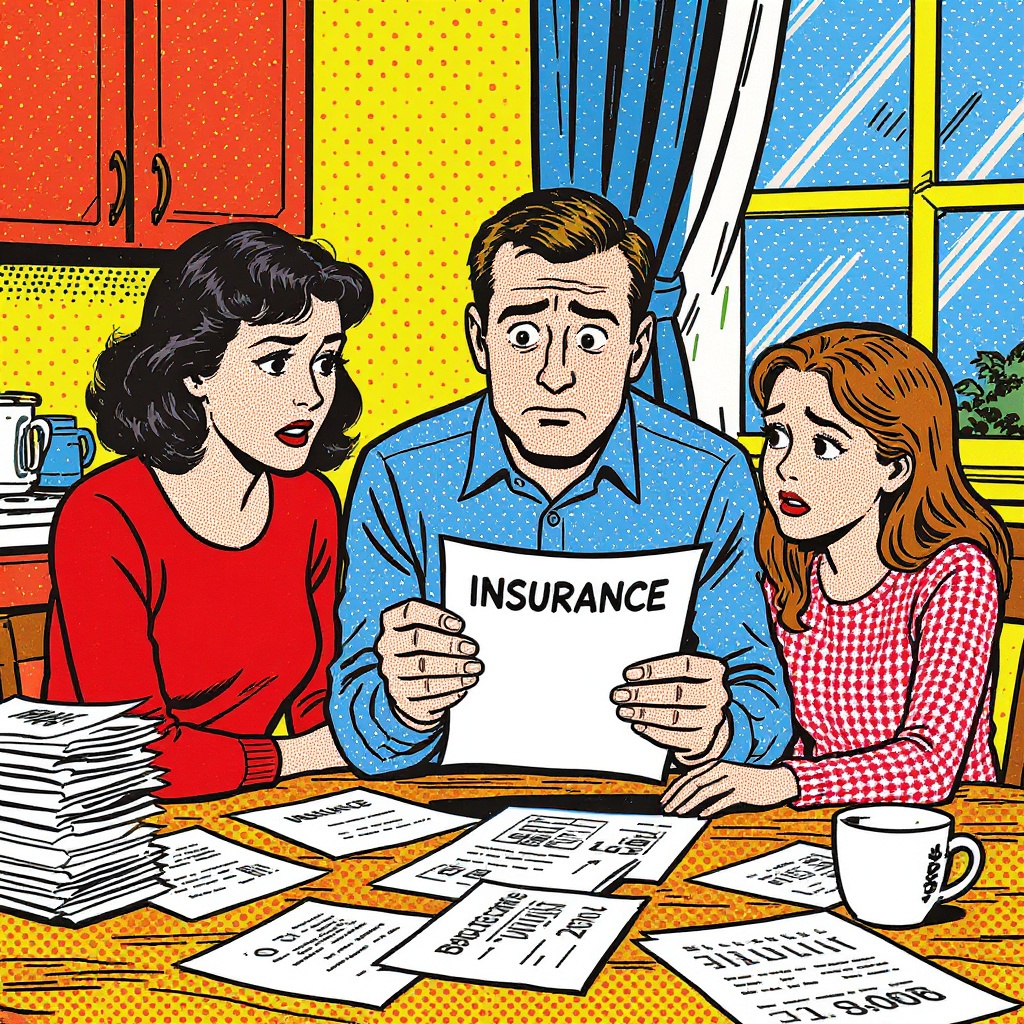
The insurance gap is the distance between what your health insurance covers and what your life actually costs when something goes wrong. It’s not about bad policies or lazy insurers. It’s about the design of the system.
Health insurance pays for:
- Hospital stays (mostly)
- Doctor visits (subject to copays)
- Surgeries and procedures (pre-authorized)
- Standard medications (on the formulary)
Health insurance does NOT pay for:
- Home modifications — wheelchair ramps, bathroom grab bars, stair lifts
- Round-the-clock home care — the aides Kate needed just to get through the day
- Lost income — when you can’t work and your employer-sponsored plan can’t help
- Mental health support — for the depression that comes with losing your independence
- Experimental treatments — anything considered “investigational” by the insurer
- Transportation to medical appointments — 100+ miles a week, every week
- Medical equipment not classified as “essential” — specialty mattresses, accessible furniture
The Number No One Shares
A 2019 survey by the National Association of Insurance Commissioners found that 64% of American families could not cover a $1,000 unexpected medical expense without going into debt. And that was before the pandemic drove medical costs significantly higher.
When you drill into families dealing with serious chronic illness — ALS, multiple sclerosis, late-stage cancer — the number that actually gets paid out of pocket is often 3-5 times what their insurance premium suggests they’ll spend. The gap isn’t a rounding error. It’s a second mortgage.
Here’s the thing that makes the insurance gap so insidious: it hits when you’re most vulnerable. You’re already dealing with a devastating diagnosis. You’re already adjusting to a new version of your life. And then you get the itemized bill for the home health aide that your insurer decided was “custodial care” rather than “medical care” — a distinction that exists entirely because it saves the insurer money.
AFLAC and the Supplemental Landscape
Aftermarket insurance products — AFLAC, Colonial Penn, United Healthcare’s supplemental plans — exist specifically to close this gap. They’re not replacements for major medical coverage. They’re designed to pay you cash when you’re sick, and you use that cash however you need to.
Critical illness insurance, specifically, pays a lump sum — typically $10,000 to $50,000 — when you’re diagnosed with a covered condition. Heart attack, stroke, cancer, organ failure, ALS. The money is yours. No one asks what you spent it on. For a family dealing with something like Kate’s diagnosis, that payout can mean the difference between staying home with hired help and being forced into a nursing facility because the family can’t afford round-the-clock care.
The math is stark: A home health aide costs $4,000 to $8,000 per month. A standard health insurance policy does not cover home health aides. A critical illness policy that pays $30,000 at diagnosis can cover four to eight months of in-home care while the family figures out long-term arrangements.
The premium for critical illness insurance is typically $30 to $100 per month depending on age, health status, and coverage amount. For many families, that’s less than a monthly streaming subscription. And it’s the kind of thing you never think you need until the day you need it.
What Kate’s Story Actually Teaches
Kate is a fictional character. But her situation is not. The film is based on real research into ALS families and what happens to them financially, not just medically.
The insight the film offers is not “health insurance is bad.” It’s that health insurance is designed to cover the medical event, not the life that follows. And the life that follows — the lost wages, the home modifications, the 24-hour care, the depression, the marriage strain — that’s where families actually break.
The insurance gap is not a failure of the system in some abstract sense. It’s a specific, quantifiable distance between what your insurance pays and what your recovery actually costs. And it can be partially bridged with supplemental products that most people never buy because no one explains the gap to them clearly.
Kate’s story doesn’t have a happy ending in the way Hollywood typically means that phrase. But the families who navigated her situation with supplemental coverage in place — who had AFLAC policies or critical illness insurance or adequate disability income coverage — those families reported significantly lower rates of personal bankruptcy, marital dissolution, and depression. The money didn’t fix the disease. But it meant they could focus on being there for each other instead of fighting with insurance companies and creditors at the same time.
That’s the lesson. Not fear. Not financial advice. Just awareness that the gap exists, it’s real, and it’s one of those things you can do something about before it becomes a crisis rather than during one.
About the Film
You’re Not You (2014) is directed by George C. Wolfe and stars Hilary Swank, Emmy Rossum, and Josh Duhamel. Rated PG-13 for thematic material involving illness and emotional intensity. Available on Amazon Prime. Watch the trailer →
YellowBus helps families find the right insurance coverage to protect what they’ve built. Get a free quote comparison →