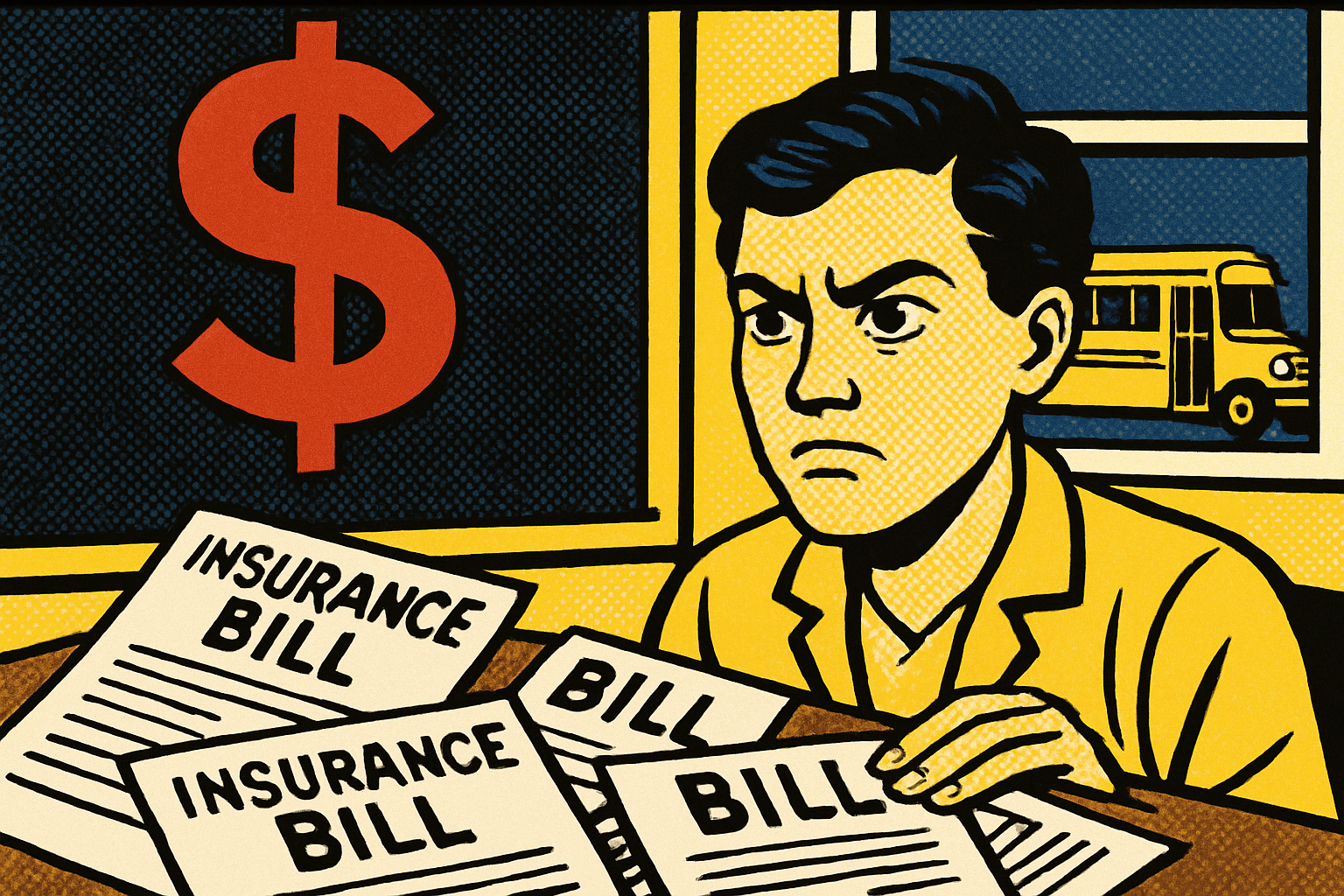
Ask most families what they spend on insurance each month, and they can tell you the number. Ask them what they have budgeted for a lawsuit, a house fire, or a cancer diagnosis — and you'll get a blank stare.
That's not a character flaw. It's a blind spot built into how we think about money.
The most dangerous line in your budget is the one labeled "optional."
Most budgeting frameworks — the 50/30/20 rule, the envelope system, the debt snowball — treat insurance as a variable expense. Something to trim when rent goes up. Something to revisit after the emergency fund is filled. Something to cut when you're trying to make ends meet.
That's exactly backwards.
Insurance isn't a luxury you're buying for your budget. It's the thing that makes the rest of your budget exist.
What the Numbers Actually Show
Let's do a quick thought experiment.
The average American family spends roughly $1,400–$2,250 per month on health insurance premiums — either through an employer plan or the ACA marketplace (KFF, 2026). Add auto, home, and life insurance, and many families are spending $200–$600 additional per month on protection.
Now compare that to what one uninsured medical event can cost. A three-day hospital stay averages $30,000. A serious car accident with litigation can easily hit $100,000+. A premature death in a family with a mortgage and two kids leaves behind a financial crisis no amount of love can undo.
The question isn't whether insurance is expensive. It's whether you're comparing insurance costs to the wrong baseline.
You're not comparing premiums to savings. You're comparing premiums to the full, unsubsidized cost of the disaster.
The Real Cost of the "I'll Just Skip It" Decision
Here's what families tell themselves when they drop coverage: "I'll save $400 a month. I'll put it in savings. If something happens, I'll use that."
That logic fails in three ways simultaneously.
First: savings don't cover catastrophic loss. The median American household has less than $5,000 in savings. A serious health event can generate $50,000+ in bills. You're not saving your way to financial safety on a tight budget.
Second: you can't save and self-insure at the same time. Every dollar you set aside "just in case" is a dollar you're not using to pay down debt, build an emergency fund, or save for your kids' education. The moment you decide to self-insure, you're committing to a constant savings pace that almost no family maintains for long.
Third: the timing problem. Emergencies don't announce themselves. A health crisis, a lawsuit, a kitchen fire — they happen when you're already stretched. The month you lose your coverage is often the month something goes wrong.
Data from KFF shows that 38% of Americans carry medical debt in 2026 — including many who have insurance. The uninsured face even steeper odds. And it's not just about being sick. It's about being financially wrecked by a bill you couldn't see coming.
What a Realistic Insurance Budget Looks Like
This doesn't mean you have to accept whatever premium your insurer quotes. It means you should budget for insurance the same way you budget for your mortgage: as a fixed, non-negotiable line item.
Here's a practical starting point:
- Health insurance: 8–12% of gross household income is a reasonable ceiling if you're buying on the individual market. If your employer offers coverage, take it — the subsidy is worth more than most people realize.
- Auto insurance: 2–4% of household income. If you're paying significantly more, it's worth shopping every two years.
- Homeowners/renters: Tied to your home's replacement value, but typically 1–3% of home value annually. For most families, $80–$200/month.
- Life insurance: A term policy covering 10–12x your annual income runs most families $30–$80/month. That's not a luxury — it's the difference between your kids losing their home and keeping it.
None of these numbers are exact. But the principle is: budget for insurance as a line item, not as a variable you adjust when money is tight.
The Better Question to Ask
Instead of "How much can I afford to pay for insurance?" — ask: "If something catastrophic happened tomorrow, what would it cost, and what's the cheapest way to make sure that cost doesn't destroy my family?"
That's a different calculation. And it's one where insurance almost always wins.
The right insurance coverage doesn't drain your budget. It protects everything you've already put into it.
Protect Your Family With the Right Coverage
A licensed insurance agent can review your specific situation — your income, your family, your assets — and find coverage that actually fits your budget. Not just any policy. The right one.